Preparing land for construction takes six steps: confirm where the build sits, mark utilities and boundaries, clear vegetation, remove stumps and debris, correct drainage, then grade and compact the pad. The order matters more than the steps themselves. Running them out of sequence is what costs East Texas landowners real money.
That last part gets left out of most guides. They hand you a checklist and stop. But a checklist doesn’t tell you that grading a site before you know where water goes means paying to grade it twice.
We’ve spent 25 years walking raw acreage across East Texas and the DFW area. The jobs that go smoothly aren’t the ones with the easiest terrain. They’re the ones where the owner knew what the finished site needed to do before a blade ever touched dirt. Our land clearing services page covers methods and pricing; this article covers the sequence.
Start With What the Finished Site Has to Do
Prep for a hay barn isn’t prep for a house on a slab. Prep for a house on a slab isn’t prep for a shop with a heavy equipment approach. Before anything else, decide the end use.
That single decision drives everything downstream: how much elevation you need, which direction water has to run, where the driveway comes in, and how deep the utility runs have to be. Skip it and you’re making expensive guesses.
Walk the Property First
Walk your land with whoever will do the work. Not a phone call, not a satellite photo. Feet on the ground.
On East Texas acreage we’re looking for low spots that hold water after rain, the natural fall of the land, soil that turns to gumbo when wet, old fence lines, buried debris from a homestead that used to sit there, and trees worth keeping. A satellite image shows none of that.
Pro Tip: Pull your property’s soil data from the USDA’s Web Soil Survey before your first site visit. It’s free, and it tells you whether you’re dealing with heavy clay, shrink-swell soil, or seasonal wetness, all of which change the prep plan.
Mark What Stays
Flag every tree you want to keep. Flag property corners. Flag the septic field, the well head, and anything you’d be upset to lose.
Once a mulcher or dozer is running, there’s no undo button. Ten minutes with a can of marking paint prevents the single most common regret we hear from landowners.
Handle the Paperwork Before Equipment Arrives
This is the step everyone wants to skip, and it’s the one that can shut a job down mid-week.
Start with utility locates. Under Texas law, anyone digging 16 inches or deeper with mechanical equipment has to notify a one-call center first. File through Texas 811 no earlier than 14 days and no later than 48 hours before you dig, not counting weekends and holidays. The service is free.
Did You Know? The Texas one-call system notifies member utility operators, but water and sewer lines generally aren’t part of it. If your property has a rural water district line, an old irrigation main, or a private septic run, you need those located separately. It’s one of the most common surprises we hit on rural acreage.
Permits come next. Texas has no statewide land clearing permit, and county authority over rural clearing is limited. But if your project disturbs one acre or more of soil and stormwater from the site reaches surface water, you need coverage under the TCEQ Construction General Permit (TXR150000). That means a $225 authorization and a stormwater pollution prevention plan in place before work begins. Most residential build sites clear the one-acre mark once you count the pad, driveway, and staging area.
Work in or near a creek, pond, or wetland can also trigger federal Clean Water Act review through the Army Corps of Engineers. Ask about it early, not after the dozer is loaded.
The Six Steps to Prepare Land for Construction
Here’s the full sequence, in the order it should run:
- Define the build area. Stake the footprint, driveway, and any outbuildings so everyone works from the same map.
- Locate and mark utilities and boundaries. File your 811 ticket, confirm corners, and flag protected features.
- Clear vegetation. Remove trees and brush by dozer, excavator, or forestry mulcher depending on what the land needs afterward.
- Remove stumps and subsurface debris. Grind or pull stumps, and pull out old concrete, rebar, and buried trash.
- Correct drainage. Establish where water enters, crosses, and leaves the site before reshaping anything.
- Grade and compact. Cut, fill, level, and compact the pad to the elevation the build requires.
Steps three and four are where most landowners think the job lives. Steps five and six are where the money actually is.
Why We Won’t Grade a Site Until Drainage Is Settled
Here’s a position that surprises people: we’ve told landowners no. Not “we’re booked,” but “we’re not grading this pad yet.”
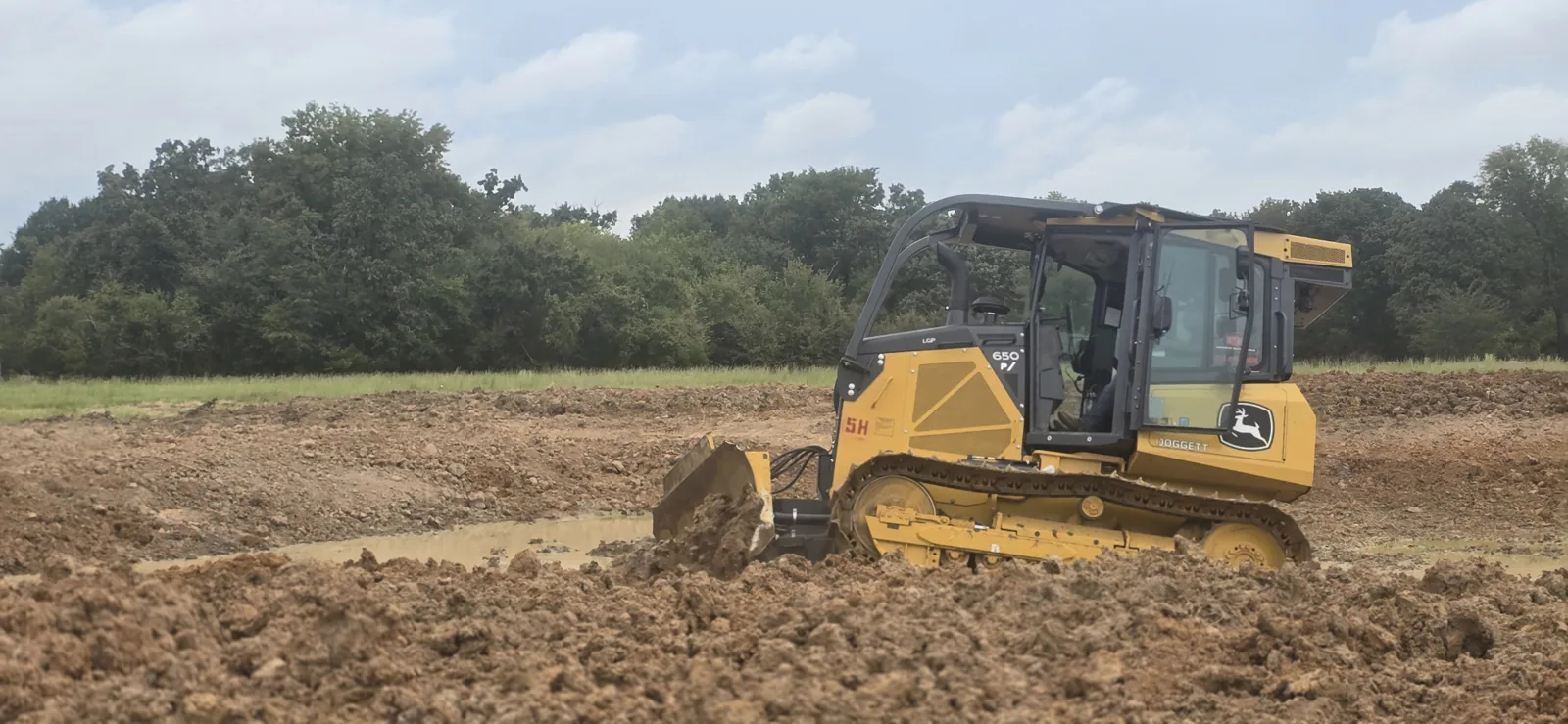
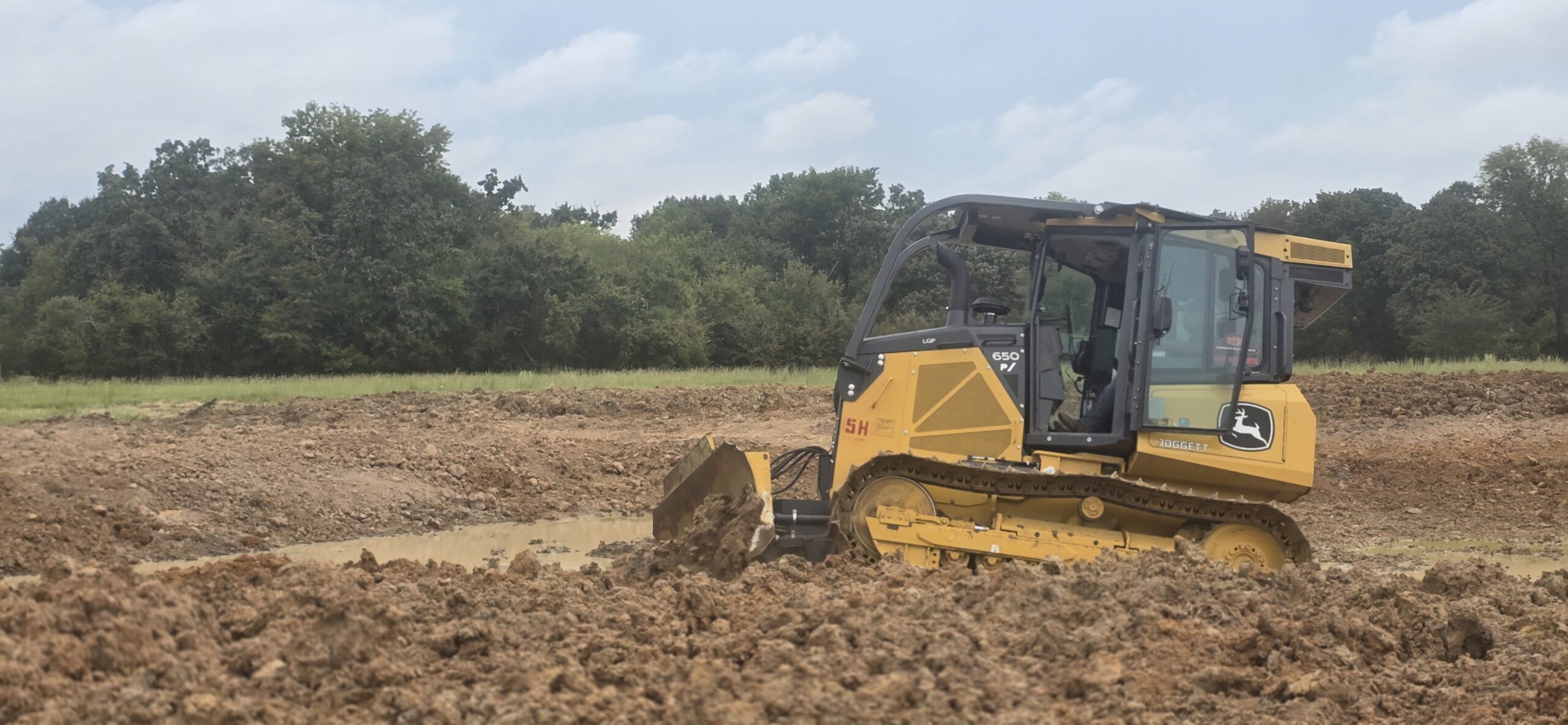
It happens most often on newly cleared property in heavy clay. The land looked flat while covered in brush. Once cleared, you can see the fall, and it runs straight toward where the owner wanted the house. Grading a pad there produces a beautiful, level, perfectly compacted bowl that collects water every spring.
The fix costs almost nothing at that stage. Shift the pad thirty feet, raise the finished elevation, cut a swale to redirect flow. The same fix after a slab is poured means french drains, hauled fill, and a landscape crew, and it never works as well as getting it right the first time.
That’s why our crews stay on-site through the whole sequence instead of clearing and leaving. When land clearing rolls straight into excavation and drainage work, nobody hands a problem off to the next contractor.
How Long It Takes and What to Budget
Timelines depend on vegetation density and terrain more than raw acreage. A cleared pasture pad moves fast. Dense mixed hardwood with stumps does not. These are planning estimates from our own East Texas jobs, not quotes:
| Project scope | Typical field time |
| 1 acre, moderately wooded, simple pad | 1–2 days |
| 2–5 acres, dense trees plus stump removal | 4–7 days |
| 5+ acres with drainage correction | 2–3 weeks |
| Permits, locates, and scheduling (before work) | 1–3 weeks |
Budget that paperwork window into your build schedule. Utility locates and permit authorizations run on their own clock, not yours.
Pro Tip: Book site prep six to eight weeks before you want to break ground. Demand for clearing and site preparation and grading climbs from February through April as landowners push for spring builds. Fall scheduling is easier and often cheaper.
Choosing who does the work matters as much as the sequence. Our guide on what to ask a land clearing contractor before you sign walks through the questions that separate a real plan from a guess.
Ready to Get Started?
Preparing land for construction isn’t complicated, but it is order-dependent. Know what the finished site has to do, file your locates and permits early, clear before you grade, and settle drainage before you shape a single pad. Get that sequence right and the rest of your build has a solid foundation under it.
RTS Construction & Land Clearing offers free on-site estimates across East Texas and the DFW metroplex, with no obligation. We’ll walk your property, talk through your goals, and give you a clear plan and an honest number. Call (903) 980-0809 or request your free estimate online.
Frequently Asked Questions
How long does it take to prepare land for construction? Most residential site prep takes one to three weeks of field time, depending on vegetation density, stump removal, and drainage work. Add one to three weeks up front for utility locates and any permit authorizations.
Do I need a permit to prepare land for construction in Texas? Texas has no statewide land clearing permit, but if your project disturbs one acre or more of soil and stormwater leaves the site, you need TCEQ Construction General Permit coverage. City limits, creeks, and wetlands can add requirements. Confirm with your county before clearing.
How far ahead do I need to call 811 in Texas? File your locate request no earlier than 14 days and no later than 48 hours before digging, excluding weekends and holidays. The requirement applies to any excavation 16 inches or deeper using mechanical equipment.
Should I clear the land or grade it first? Clear first, then grade. Grading before removing trees, stumps, and buried debris leaves voids and organic material under your pad, which causes settling later.